
May 31, 2026
Key Highlights:
● Easily distracted kids often struggle more with environmental overload than with motivation.
● Small physical changes in a homework area can significantly improve focus and task completion.
● Noise, clutter, lighting, and device placement quietly increase cognitive fatigue during homework.
● “Friction-free” homework spaces reduce the number of decisions children must make while working.
● Parents can improve concentration without creating rigid or stressful study environments.

Estimated Reading Time: 11 minutes┃Post By Claire Whitmore
The kitchen table looked perfect on paper. Bright lighting. Plenty of space. A parent nearby in case homework help was needed.
Yet every afternoon, nine-year-old Mason somehow turned a twenty-minute worksheet into a ninety-minute emotional marathon. He sharpened pencils three times, got up for water twice, asked unrelated questions, stared at the dog, tapped his feet, and complained that math felt "too long." Meanwhile, dinner sounds filled the kitchen, cabinets opened and closed, phones buzzed, and his younger sister wandered through asking for snacks.
His parents initially assumed the problem was laziness. Then they assumed it was attitude. Eventually, they realized something uncomfortable: the environment itself was exhausting his attention before the actual homework even began.
Many parents picture focus as a personality trait. In reality, focus is often heavily influenced by environmental design. Research shows that homework distractions increase when students face competing activities, excessive stimulation, and poorly managed study environments. Students completing homework at home encounter many more distractions than they typically face during structured classroom learning.

A “friction-free” homework space does not mean a silent, minimalist office that looks like a magazine photo. It means reducing the small barriers that repeatedly interrupt momentum for children who are already working hard to stay focused.
Some children lose focus because the work is challenging. Others lose focus because their environment keeps demanding attention every few seconds.
What “Friction” Actually Looks Like During Homework
Parents often notice only the obvious distractions. They identify the television, the tablet, or the sibling running through the room. However, the biggest attention drains are frequently much smaller and more repetitive.
A child may need to get up repeatedly because supplies are missing. They may struggle with background conversations, uncomfortable seating, visual clutter, or constant movement occurring around them. None of these interruptions seem significant individually. Together, however, they can consume enormous amounts of mental energy.
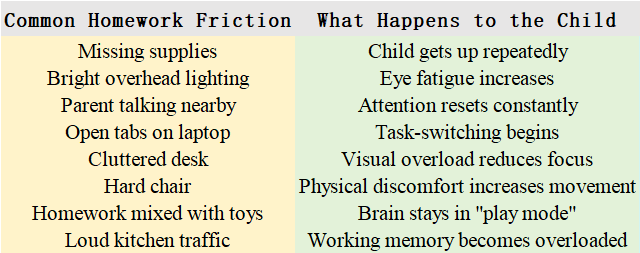
Researchers studying homework distraction found that students report higher levels of distraction when environmental conditions are less supportive and when competing activities remain accessible. Factors such as technology use, background activity, and poor study environments are consistently linked with reduced homework focus.
This helps explain why some children can concentrate reasonably well at school yet struggle dramatically at home. Schools are designed to reduce distractions and simplify expectations. Home environments are often filled with competing demands for attention.
The Biggest Mistake Parents Make: Overbuilding the Homework Space
When parents recognize a distraction problem, they sometimes overcorrect. They purchase expensive desks, demand complete silence, remove every object from the room, and expect children to sit perfectly still for long periods.
Unfortunately, this approach often creates a different problem.
A friction-free homework space should feel comfortable and supportive rather than rigid and intimidating. Many children need a certain degree of movement, flexibility, and sensory regulation to maintain attention.
For example, some children concentrate better while gently swinging their legs, squeezing a stress ball, or standing briefly during difficult assignments. Parents frequently report that allowing controlled movement and short breaks improves homework completion rather than harming it. Community discussions among students and parents consistently mention removing distractions, hiding phones, and incorporating manageable breaks as helpful strategies.

The goal is not perfect stillness. The goal is reducing unnecessary attention drains.
Step 1: Choose the Right Location — Not the “Perfect” One
Many parents believe children need a dedicated bedroom office to focus. In reality, the best location is simply the place with the fewest interruptions.
For some children, this might be a desk in a quiet corner of the dining room. Others work better at a small table in their bedroom. Some children actually benefit from having a parent nearby, provided that the parent is not constantly engaging them in conversation.
An effective homework location typically includes predictable noise levels, limited foot traffic, adequate lighting, and easy access to supplies.
Consider two common scenarios.
High-Friction Setup: Homework takes place at the kitchen island while dinner is being prepared, family members walk by constantly, and a television can be heard from the next room.
Lower-Friction Setup: A small desk faces a wall in a quieter corner of the house where interruptions occur less frequently.
The second environment is not perfect. It is simply less demanding on the child's attention.
Step 2: Remove Invisible Decision-Making
Children who are easily distracted often spend significant mental energy making small decisions before they even begin working.
Questions such as "Where is my pencil?" or "Which folder do I need?" may seem minor to adults. However, each interruption forces the child to pause, search, and restart.
One of the simplest ways to reduce homework friction is to create permanent homes for frequently used materials.
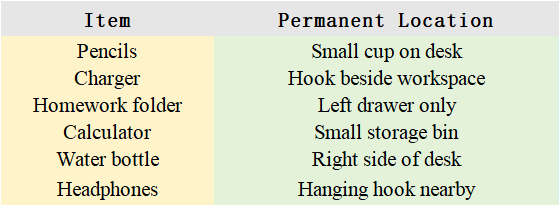
When supplies are consistently available, transitions become smoother and children spend less time wandering around the house searching for what they need.
Step 3: Control Visual Noise
Visual clutter competes for attention. Children do not always realize it is affecting them, but their brains continue processing everything within view.
A workspace covered with toys, old papers, art supplies, cords, and random objects constantly invites distraction. This is particularly challenging for highly observant children.
A useful guideline is to keep only the materials needed for the current assignment visible. Everything else can be temporarily removed.
Research on visual distraction in learning environments suggests that task-irrelevant visual stimuli can interfere with attention and self-regulation during academic tasks.
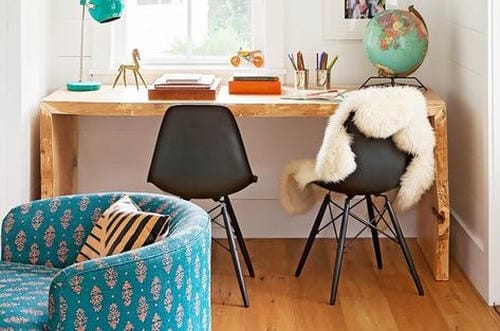
Step 4: Use Lighting That Supports Attention
Lighting is often overlooked, yet it can influence concentration, mood, and energy levels.
Lighting that is too dim may encourage drowsiness. Lighting that is excessively harsh can increase irritation and visual fatigue.
Many children perform best when their workspace includes:
● Bright but comfortable lighting
● Minimal screen glare
● A dedicated desk lamp
● Natural daylight when available
Parents sometimes spend hundreds of dollars on organizational tools while ignoring poor lighting conditions that affect homework every day.
Step 5: Reduce Technology Exposure — Even When Homework Requires Screens
Technology has become one of the most common sources of homework distraction.
The challenge is not limited to games or social media. Notifications, messaging apps, open browser tabs, and even the mere presence of a phone can pull attention away from schoolwork.
Research across multiple educational settings has repeatedly shown that digital multitasking and smartphone distraction reduce sustained concentration and contribute to procrastination and delayed task completion.
Simple adjustments can make a substantial difference:
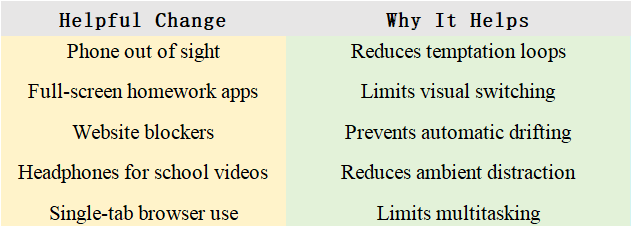
Students discussing focus challenges online frequently identify phones as one of the largest barriers to completing homework efficiently.
Step 6: Stop Treating Stillness as Focus
Many adults assume that a child who is moving is not paying attention.
In reality, some children focus more effectively while engaging in controlled movement. Standing desks, wobble cushions, stress balls, and brief movement breaks can all help certain learners maintain concentration.
Imagine a ten-year-old who struggles to complete reading assignments while sitting still for long periods. After introducing short movement breaks every twenty minutes and allowing occasional standing, homework completion time drops significantly.
The assignments remain exactly the same. The environment simply becomes better aligned with how the child regulates attention.
Step 7: Build Predictable Homework Routines
Children generally handle transitions better when expectations are consistent.
A predictable schedule reduces uncertainty and limits daily negotiations about when homework should begin.
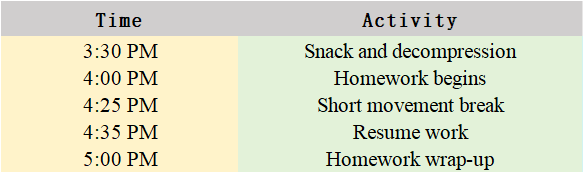
Consistency matters more than perfection. Children who know what to expect each day often spend less energy resisting the process.
Step 8: Create “Launch Momentum”
For many distracted children, starting homework is harder than completing it.
Parents often unintentionally create extra barriers by requiring children to locate supplies, organize papers, clear space, and gather materials before beginning.
Instead of saying:
"Go do your homework."
Try saying:
"Your math sheet is already on the desk, and your pencil is ready."
The task immediately feels smaller and more manageable.
Removing obstacles before work begins creates momentum and reduces resistance.

A friction-free homework space will not eliminate difficult assignments, tired evenings, learning challenges, or emotional days. What it can do is remove unnecessary obstacles.
Children who are easily distracted already expend considerable effort maintaining focus. By reducing noise, clutter, technology temptations, and constant interruptions, parents can help ensure that more of the child's mental energy is devoted to learning rather than simply trying to stay on task.
(This article is intended for informational and educational purposes only and should not replace professional educational, behavioral, or medical guidance. Every child’s attention patterns, learning style, and emotional needs are different. Parents should consult qualified professionals if homework struggles significantly interfere with daily functioning, emotional well-being, or academic performance.)
FQAs
1. Should children always do homework in complete silence?
No. Some children focus well with quiet background sounds or soft instrumental music. The key is minimizing unpredictable noises that repeatedly capture attention.
2. What if my child refuses to use the homework space I created?
Allow the child to participate in designing the area. Giving them ownership over small choices often increases cooperation and long-term use.
3. How long should homework sessions last before breaks?
Younger children often benefit from breaks every 10–20 minutes, while older children may comfortably work for 20–30 minutes before needing a short reset.
About Author
Claire Whitmore is a fictional parenting writer and former elementary learning-support specialist with more than a decade of experience helping families develop practical homework routines. Her work focuses on creating realistic home environments that reduce stress and improve children's ability to focus, organize, and complete school assignments.
References
Xu, J., Yang, F., & MacLeod, J. (2024). Revalidation of the homework distraction scale and multilevel antecedents. International Journal of Educational Research, 128, 102479.
Wolff, S. M., Wright, D. B., & Hatcher, W. J. (2024). Task-irrelevant visual distractions and mindful self-regulated learning in a low-stakes computer-based assessment. Frontiers in Education, 9.
Deng, L., Zhou, Y., & Broadbent, J. (2024). Distraction, multitasking and self-regulation inside university classroom. Education and Information Technologies, 29, 23957–23979.
Siebers, T., Beyens, I., & Valkenburg, P. M. (2024). The effects of fragmented and sticky smartphone use on distraction and task delay. Mobile Media & Communication, 12(1).
Stay on this blog and explore more evidence-based parenting articles designed to make everyday family life easier and more enjoyable.