
June 3, 2026
Key Points:
● Children often become more anxious when bedtime routines constantly change.
● Too many sleep strategies at the same time can overstimulate kids instead of calming them.
● Parents may accidentally create longer bedtime battles by over-managing sleep.
● Consistency usually works better than adding new bedtime “fixes” every night.
● Simple routines are easier for children’s brains to recognize and trust.

Estimated Reading Time: 11 minutes┃Post By Linden Cove
At 7:45 p.m., Mia’s parents started the bedtime sequence. First came lavender spray on the pillow because a parenting podcast recommended it. Then came magnesium gummies because another parent in a Facebook group swore by them. After that, they turned on white noise, dimmed the lights to orange, read two calming books, used a projector with stars on the ceiling, played sleepy music, rubbed lotion on Mia’s arms, and finally sat beside her bed whispering affirmations about rest.
At 9:18 p.m., Mia was still awake. She asked for water twice. She cried when the music stopped. She wanted another story because “the sleepy routine didn’t work yet.” Her parents looked exhausted and frustrated because they had spent nearly 90 minutes trying to help their child sleep.
This pattern is becoming increasingly common in many households. Parents are surrounded by endless sleep advice online. One expert recommends earlier bedtimes. Another suggests melatonin. Someone else insists children need blackout curtains, sensory blankets, special playlists, red lights, magnesium baths, meditation scripts, or elaborate reward charts.

The problem is not that every sleep strategy is harmful. The problem is that many parents pile several strategies together all at once, especially after a few difficult nights. Instead of creating calm, bedtime becomes crowded, unpredictable, and emotionally intense. Children often respond to that pressure by resisting sleep even more.
Research from pediatric sleep experts consistently emphasizes the importance of predictable routines and consistent sleep habits rather than overly complicated bedtime systems.
Why Parents Start Adding More and More Sleep Tricks
Sleep deprivation changes parental decision-making. After several nights of interrupted sleep, most adults become desperate for fast solutions. A toddler who suddenly starts fighting bedtime can make parents feel like something is “broken” that must be fixed immediately.
A typical escalation often looks like this:
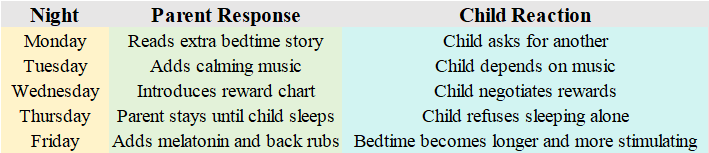
None of these choices seem unreasonable by themselves. The issue is cumulative overload. Many parents unintentionally turn bedtime into a performance where everyone is anxiously monitoring whether sleep is “working.”
Children quickly notice this tension. A four-year-old may not understand sleep science, but they absolutely notice when their parents suddenly start introducing five new calming techniques while repeatedly asking, “Are you sleepy yet?” That pressure alone can make bedtime emotionally activating.
The Brain Does Not Calm Down Through Constant Novelty
One of the biggest misunderstandings about sleep is the belief that more calming tools automatically equal more sleepiness. In reality, children’s nervous systems usually respond better to familiarity than novelty. When bedtime changes every few nights, children stay mentally alert because they do not know what to expect next.
Imagine a bedtime routine that suddenly includes a new sound machine, a breathing exercise, a sticker chart, a weighted blanket, special sleepy tea, a parent lying beside the bed, and a “sleep meditation” video.

For adults, this may feel like helpful support. For children, it can feel like a giant spotlight has been placed on sleep itself. Instead of naturally winding down, the child starts monitoring the process by wondering, “Am I sleepy yet?” “What comes next?” “Do I still get my reward if I wake up?” and “Will Mom stay longer tonight?”
This creates cognitive stimulation at the exact moment the brain should be disengaging. Experts from pediatric sleep organizations repeatedly stress that routines should remain calm, predictable, and relatively short.
When Bedtime Quietly Turns Into Negotiation Hour
Parents often do not realize how quickly bedtime can become transactional.
Consider this real-world style scenario:
A six-year-old named Lucas initially needed only 20 minutes to settle before sleep. Then he went through a stressful week at school and started resisting bedtime.
His parents responded by trying several strategies at once, including extra cuddles, longer stories, sleep spray, a prize chart, “five more minutes” negotiations, and staying in the room until he fell asleep.
Within two weeks, bedtime expanded to nearly two hours. Lucas was not trying to manipulate his parents in a calculated way. He simply learned that bedtime had become highly interactive. Every delay brought additional attention, conversation, comfort, or novelty. This creates a hidden reinforcement loop.

Over time, the child stops associating bedtime with winding down and starts associating it with prolonged emotional engagement.
Overtired Children Often Look More Hyper, Not Sleepy
One major reason parents keep adding sleep tricks is because overtired children can behave in confusing ways.
A child who truly needs sleep may run around the house wildly, laugh uncontrollably, become emotionally explosive, ask endless questions, or suddenly seem “fully awake.”
Parents then assume the child is not tired and add more stimulation to “help” them wind down. But overtiredness can actually increase emotional dysregulation and restlessness.
Several pediatric sleep resources note that maintaining consistent schedules and avoiding overtiredness are key to healthier sleep patterns.
What Simpler Bedtimes Often Look Like
Families with smoother bedtimes are not necessarily doing more. In many cases, they are doing less — but doing it consistently.
Here is an example of a realistic, lower-stimulation bedtime routine for a preschooler:
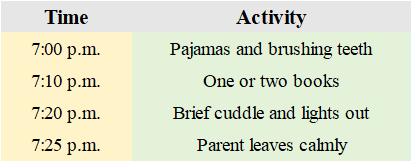
Notice what is missing. There are no negotiations, no rotating sleep hacks, no endless troubleshooting, and no emotional debates about sleep.
This does not mean bedtime becomes magically perfect overnight. Children still protest sometimes. They still go through regressions, fears, illnesses, travel disruptions, and developmental changes. But the overall structure remains stable. That stability helps the brain predict sleep.
Parents Sometimes Accidentally Replace Sleep With Dependence
Another hidden issue appears when children become dependent on highly specific sleep conditions.
For example, some children only sleep if a parent rubs their back for 40 minutes. Others require multiple songs in an exact order or need constant conversation until asleep.
The problem is not comfort itself. Comfort is healthy and necessary. The issue arises when the sleep process becomes so externally managed that the child struggles to settle without repeated intervention.
Healthy sleep routines generally encourage children to gradually develop independent settling skills while still feeling emotionally supported.

Social Media Intensifies Bedtime Anxiety
Parents today consume more sleep advice in one week than previous generations may have absorbed in years.
A parent scrolling online at midnight might encounter warnings about “the one bedtime mistake ruining your child’s brain,” recommendations for supplements every tired parent supposedly needs, explanations for why a child wakes at 2 a.m., or promises about the “exact bedtime formula” sleep consultants use.
This flood of information creates pressure to constantly adjust routines. Instead of giving one consistent approach enough time to work, families often jump rapidly between methods.
One night they try strict independence. The next night they try co-sleeping. Then rewards. Then consequences. Then meditation tracks. Children experience these rapid changes as instability.
A Practical Reset for Overcomplicated Bedtimes
Families overwhelmed by bedtime chaos do not necessarily need a perfect new system. Often, they need simplification.
Here is a realistic reset approach:
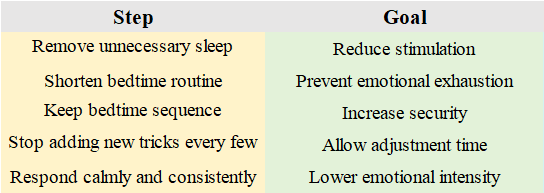
This reset period may initially trigger more protests because children are adjusting to fewer interactions and less negotiation. However, many families report that bedtime becomes shorter and calmer after consistency returns.
What Parents Should Remember During Difficult Sleep Phases
Some bedtime struggles are completely normal.
Children experience separation anxiety, nightmares, developmental leaps, school stress, illness disruptions, and fear phases.
No bedtime routine eliminates every difficult night. The goal is not robotic perfection. The goal is creating an environment where sleep feels safe, predictable, and emotionally low-pressure.
Parents do not need twelve sleep tools operating simultaneously. Most children benefit more from a calm adult, a familiar routine, and consistent expectations than from an elaborate collection of bedtime interventions.
Conclusion
Bedtime often gets worse when parents continuously stack new sleep tricks onto an already stressful evening.
What begins as loving effort can accidentally transform sleep into a complicated project filled with negotiation, stimulation, and emotional pressure.
Children usually do not need a highly engineered bedtime experience. They need predictability.
A short routine repeated consistently often works better than a constantly changing collection of sleep solutions.
Sometimes the most effective bedtime adjustment is not adding one more trick. It is removing several.
(This article is intended for informational and educational purposes only and should not replace professional medical advice, diagnosis, or treatment. Parents concerned about persistent sleep difficulties, breathing problems during sleep, severe anxiety, or developmental concerns should consult a licensed pediatrician or sleep specialist.)
FAQs
1. How long should a child’s bedtime routine usually be?
For many children, a routine lasting about 20 to 40 minutes is sufficient. The exact length depends on age and temperament, but routines that become excessively long can unintentionally increase stimulation and delay sleep.
2. Is it bad to use white noise or nightlights?
Not necessarily. Many children sleep well with white noise or dim lighting. Problems usually appear when parents constantly switch tools or add multiple sleep aids at once instead of maintaining a simple, predictable setup.
3. How long should parents try one bedtime approach before changing it?
Many sleep adjustments require at least one to two weeks of consistency before families see reliable changes. Constantly changing strategies every few nights can make bedtime more confusing for children.
About Author
Linden Cove is a fictional family wellness writer specializing in realistic parenting routines, emotional regulation in children, and household behavior patterns. She has spent over a decade interviewing pediatric sleep consultants, child development educators, and parents navigating everyday family stress. Her writing focuses on practical solutions that fit real homes rather than idealized parenting scenarios.
References
American Academy of Pediatrics. (2023). Screen time affecting sleep.
Johns Hopkins Medicine. (2026). Healthy sleep habits.
Parents. (2024). The age-by-age guide to better bedtimes for kids.
Stay awhile and explore more parenting articles on this blog for practical, realistic strategies that make everyday family life feel calmer and more manageable.