
May 28, 2026
Key Takeaways:
● Many toddler meltdowns that look behavioral are often closely tied to unstable blood sugar patterns and hunger timing.
● Toddlers use energy quickly, so even short gaps between meals can trigger emotional dysregulation.
● High-sugar snacks can create rapid energy spikes followed by irritability and mood crashes.
● Parents often misinterpret early hunger signals as defiance, overstimulation, or emotional outbursts.

Estimated Reading Time: 11 minutes┃Post By Marissa Ellery
The meltdown did not start with a tantrum about candy. It started quietly, earlier in the afternoon, when a toddler skipped most of lunch and declared they were “not hungry anymore” after a few bites.
By the time the grocery store trip rolled around two hours later, everything changed quickly. The child was suddenly inconsolable over something small, like a broken snack or a denied treat, and the reaction escalated far beyond what the situation seemed to warrant.
A parent in this situation often tries multiple strategies in sequence: reasoning, distraction, bargaining, or eventually physically leaving the store while carrying a screaming child. Then, almost immediately after getting home, the same child eats a large amount of food in a short burst and returns to calm behavior.
This pattern is common enough that many parents begin to recognize it only after repeated cycles. What appears to be “random emotional volatility” often has a physiological component tied to energy availability and blood sugar regulation.
Toddlers have a limited ability to maintain stable internal energy awareness. They may not recognize hunger early, and even when they do, they often cannot communicate it in a consistent way. Their emotional regulation system is still developing, so physical discomfort often expresses itself as behavior rather than verbal complaint.

Clinical pediatric guidance notes that low blood glucose in children can manifest as irritability, fatigue, difficulty concentrating, and sudden behavior changes rather than explicit statements of hunger . These symptoms can easily be mistaken for “misbehavior” when the underlying issue is physiological.
The result is what many parents informally describe as “snack rage”—a rapid emotional escalation that appears disproportionate to the trigger but aligns closely with hunger cycles and energy depletion.
Why Toddler “Crash Moments” Escalate Quickly
In adults, hunger typically builds gradually. There is time between early discomfort and full irritability. Toddlers do not reliably experience this gradual progression in a controlled way.
Instead, their energy state can shift quickly from stable to depleted, especially after active play, long outings, or skipped meals. Once energy drops below a certain threshold, emotional regulation becomes significantly harder.
Medical references on pediatric hypoglycemia consistently list irritability, crying, and sudden mood changes as early signs of low blood sugar in children . These behaviors often appear before obvious physical complaints like saying “I’m hungry.”
A simplified comparison helps illustrate the difference in perception:
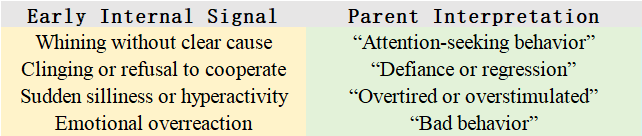
In many cases, these interpretations are partially correct in description but incomplete in cause. The behavior is real, but the driver may be physiological depletion rather than intentional opposition.
The Snack Cycle That Reinforces Emotional Swings
A common pattern in households is the use of quick snacks to manage immediate distress. While effective in the short term, the type and timing of snacks can unintentionally contribute to future instability.
The cycle often looks like this:
Child becomes hungry and irritable
Parent offers a fast, convenient snack (often high in simple carbohydrates)
Energy rises quickly and the child appears regulated
Energy drops again within a short period
The next emotional crash occurs, often more intense than the first
This is especially noticeable with highly processed or sugary snacks, which can produce rapid glucose elevation followed by a subsequent decline in energy availability.
Over time, this pattern can create predictable “emotional windows” in the day where the child becomes significantly more reactive.
Real-World Timing Breakdown: The Late Afternoon Problem
A frequent high-risk period for toddler dysregulation occurs in the late afternoon to early evening window.

This gap between structured eating opportunities is often long relative to a toddler’s energy needs. During this period, additional factors compound the issue: fatigue, sensory overload, transitions, and reduced patience.
Pediatric health guidance notes that missed or delayed meals and insufficient carbohydrate intake are common contributors to low blood sugar episodes in children . Even in children without medical conditions, these fluctuations can still affect mood and attention.
Parents often describe this window as “witching hour,” but the underlying pattern is often predictable energy depletion rather than random emotional volatility.
Why Sugar-Heavy Snacks Can Backfire
Sugary snacks are not inherently problematic in isolation, but their metabolic effect is typically fast and short-lived when consumed alone.
After a rapid rise in blood glucose, the body often experiences a corresponding decline as insulin response catches up. In sensitive children, this can coincide with irritability, restlessness, or sudden emotional collapse.
This is why some children appear “fine immediately after eating” and then significantly worse 30–60 minutes later.
A more stable approach tends to involve combining carbohydrates with protein or fat, which slows digestion and prolongs energy availability.
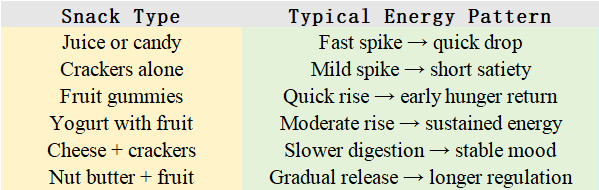
The difference is not about “good vs bad food,” but about energy stability over time.
The Misinterpretation Problem in Parenting
One of the most challenging aspects of snack-related emotional swings is how easily they are interpreted as behavioral issues.
A child in the middle of a blood sugar drop does not appear “slightly hungry.” They may appear unreasonable, aggressive, or unable to listen. In response, parents naturally increase structure, enforce boundaries, or attempt discipline strategies.

However, once a child is significantly dysregulated, cognitive reasoning is limited. The same instructions that work when the child is calm may fail completely when their physiological state is compromised.
Pediatric clinical summaries consistently list irritability, confusion, and difficulty concentrating as symptoms of low blood glucose in children . These are not behavioral choices—they are functional limitations.
A Simple Tracking Method That Reveals Patterns Quickly
Many families find that the most effective intervention is not immediate dietary overhaul, but observation.
A basic tracking approach over several days can reveal consistent patterns:
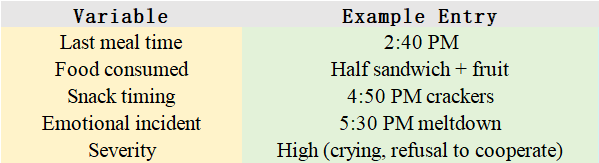
After a short period, patterns often become visible: predictable timing gaps, snack-related crashes, or recurring late-day dysregulation.
What Actually Improves Stability in Most Families
In most families, the most consistent improvements in toddler mood come from small changes to daily structure rather than large dietary interventions. The key issue is usually not specific foods alone, but the timing of meals and snacks and how long a child goes without energy intake.
Toddlers use energy quickly and have limited ability to self-regulate hunger signals. When eating opportunities are too far apart, they may shift rapidly from normal behavior to irritability, crying, or emotional outbursts before they can clearly communicate hunger.
Practical improvements often come from shortening gaps between meals, offering predictable snack timing, and preventing long stretches of low energy—especially in the late afternoon. Pairing carbohydrates with protein or fat can also help stabilize energy release, reducing sharp spikes and crashes that contribute to mood swings.

Important Nuance
Not every tantrum is driven by hunger or blood sugar fluctuations. Toddlers experience frustration, developmental limits, overstimulation, and emotional learning challenges regardless of diet.
However, physical energy stability and emotional regulation are closely connected. When physiological needs are consistently met, children generally have more capacity to handle normal developmental stressors.
The goal is not to eliminate tantrums entirely. The goal is to reduce avoidable triggers that amplify their intensity.
In many cases, the simplest version of the solution is also the least obvious in the moment: the child may not be “misbehaving”—they may simply need food sooner than expected.
(This article is for informational purposes only and does not replace professional medical advice, diagnosis, or treatment. Persistent feeding concerns, behavioral changes, or suspected medical conditions should be discussed with a qualified pediatric healthcare provider.)
FAQs
1. Does sugar directly cause toddler tantrums?
Not directly in every case. However, rapid blood sugar fluctuations can contribute to irritability and emotional instability in some children, especially when combined with fatigue or overstimulation.
2. How often should toddlers eat to avoid energy crashes?
Many toddlers do best with meals and snacks spaced roughly every 2–3 hours, though individual needs vary based on activity level and appetite.
3. What snack combinations are most stable for toddlers?
Balanced options combining carbohydrates with protein or fat—such as yogurt with fruit, cheese with crackers, or nut butter with bananas—tend to provide more sustained energy.
About Author
Marissa Ellery is a fictional parenting and child development writer with a focus on early childhood behavior patterns, family routines, and practical applications of developmental research. Her work emphasizes real-world household dynamics and evidence-informed parenting strategies.
References
HealthyChildren.org. (2026). High and low blood sugar in kids: Signs, causes and how to help.
Medical News Today. (2024). Hypoglycemia in children: Symptoms and causes.
A calmer daily routine often starts with noticing the small timing patterns behind big emotional moments—stay on this blog for more practical parenting breakdowns grounded in real-life family behavior.