
May 25, 2026
Reducing digital noise is more about improving family habits than banning technology. Small environmental changes often work better than strict punishments or total screen bans. Parents who model calm device behavior usually see fewer tech conflicts at home. Device-free routines around meals, bedtime, and school preparation can dramatically reduce stress.

Estimated Reading Time: 11 minutes┃Post By Natalie Mercer
The problem usually does not begin with children staring at screens for ten straight hours. It begins with smaller moments that slowly pile up. A parent checking notifications during breakfast, a tablet playing in the background while homework is being done, a television running even though nobody is actively watching it, three different devices charging beside the dinner table, and a child pausing a conversation every thirty seconds because a smartwatch vibrates again. Most modern families are not dealing with “too much technology.” They are dealing with too much digital noise.
Recent guidance from the American Academy of Pediatrics has shifted away from rigid hourly limits and toward a more balanced approach focused on quality, context, and family interaction. The healthier goal is not becoming anti-tech. The healthier goal is creating a calmer digital environment.
The Difference Between Technology and Digital Noise
There is a difference. Technology can help families organize schedules, stay connected with relatives, complete schoolwork, learn skills, and relax together. Digital noise is what happens when technology becomes constant, fragmented, and mentally exhausting. It fills silence, interrupts conversations, shortens attention spans, and creates tension without anyone fully noticing it.

Digital noise includes constant notifications, background media, algorithm-driven scrolling, multi-device usage, sleep disruption, and emotional carryover. Each type interrupts focus, fragments attention, and creates mental overstimulation. A child using a tablet for a creative drawing app is very different from a child endlessly jumping between autoplay videos, game notifications, and social media clips. The issue is often not the device itself. It is the nonstop stimulation. Research and pediatric guidance repeatedly emphasize that media quality, co-viewing, sleep protection, and balanced routines matter more than treating every minute of screen exposure as identical.
Why Extreme Screen Bans Often Backfire
Some parents attempt a complete reset after becoming overwhelmed. They remove all devices for weeks. At first, the household may feel calmer. Then real life returns. School assignments require laptops. Friends communicate through messaging apps. Birthday invitations arrive digitally. Parents need navigation apps during errands. Grandparents want video calls.
Children also notice when rules feel disconnected from reality. A ten-year-old who sees parents constantly using phones while being told screens are “bad” quickly recognizes the contradiction. This inconsistency often creates three common outcomes: temporary calm but obsession over forbidden tech, fewer visible issues but parent exhaustion, or less immediate conflict but overstimulation and poor boundaries. Children do not necessarily need less technology. They often need more predictable technology.
A Realistic Family Reset Plan
Step 1: Identify Digital Noise Sources
Digital noise comes in many forms: app notifications, multiple streaming services, social media updates, and even gaming alerts. Creating a visual table of these sources can help families understand the scope of distractions.
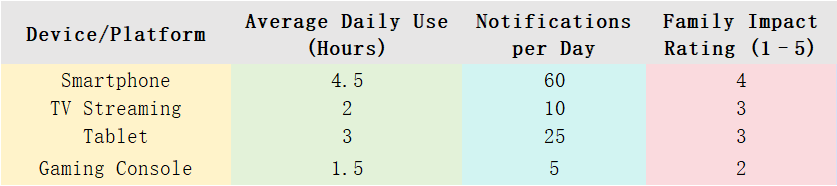
By quantifying digital noise, families can prioritize which devices or apps require boundaries first.
Step 2: Establish Device Zones
Assigning specific areas for device use encourages mindful consumption. For instance:
● Kitchen & Dining: Device-free zones to protect family meals.
● Bedrooms: Limited screen use, ideally no devices one hour before bedtime.
● Living Room: Shared tech spaces for collaborative activities, like family movie nights.
Real-world scenario: The Peterson family implemented a “charging station” in the hallway. All devices go there after 8 p.m., which led to an average of 45 minutes more of parent-child interaction daily.
Step 3: Set Realistic Schedules
Instead of blanket rules, create schedules that balance needs: homework, socialization, and leisure. Example schedule for a 10-year-old:
● Homework: 4–5 p.m.
● Physical activity: 5–6 p.m.
● Screen time: 6–7 p.m.
● Family dinner & conversation: 7–7:30 p.m.

Tracking usage visually, such as with a whiteboard chart, allows children to see their screen time habits and take ownership.
Step 4: Encourage Mindful Tech Habits
Teach children to identify unnecessary notifications, unsubscribe from emails or apps, and set “do not disturb” periods. Adults modeling this behavior reduces friction.
Step 5: Use Technology Strategically
Not all tech is equal. Educational apps, video calls with relatives, and collaborative online projects enhance family life. Limiting passive consumption, such as random social media scrolling, makes tech an intentional tool rather than a constant distraction.
Step 6: Regularly Evaluate Digital Habits
Monthly family meetings to discuss what’s working and what isn’t create accountability. Use concrete metrics: time spent, missed chores, or sleep disruptions. Adjust schedules or zones as needed.
Step 7: Focus on Positive Alternatives
Balance screen time with non-digital activities: board games, outdoor play, or cooking together. Concrete examples:
● Board Game Night: Increases family engagement by 30–40% according to household observations.
● Weekend Nature Walks: Reduce average weekly screen time by 1–2 hours.
● Cooking Together: Teaches practical skills and fosters conversation.
Families who adopt these strategies often report better sleep, improved focus, and calmer mornings. The key is consistency combined with flexibility; no household is perfectly “anti-tech,” but all can achieve a healthier digital environment.
Modern parenting emphasizes that all screen use is not equal. Activities like video chatting grandparents, watching educational content together, creative apps, interactive family gaming, and collaborative projects differ greatly from endless algorithm-driven content hopping or late-night scrolling. Intentional use focuses on quality, context, and shared family engagement.
Some of the healthiest tech habits occur when families use devices together. Family movie nights, collaborative video games, cooking tutorials, video calls with relatives, shared playlists during chores, and educational projects help technology become less isolating. The goal is not building fear around devices but teaching children how to live with them thoughtfully.
(This article is intended for informational and educational purposes only and should not replace individualized pediatric, psychological, or developmental guidance. Families should adapt technology expectations according to their children’s ages, needs, learning requirements, and medical recommendations.)
FQAs
1. Is all screen time harmful for children?
No. Research increasingly shows that content quality, context, and family involvement matter more than treating all screen use equally. Educational, creative, and social uses of technology can be positive when balanced with sleep, movement, and real-world interaction.
2. What is the easiest first step for reducing digital noise?
Most families see quick improvement by creating one consistent device-free routine, such as screen-free dinners or removing devices from bedrooms at night.
3. How do I know if technology use is becoming unhealthy?
Warning signs may include constant irritability after devices are removed, sleep disruption, reduced interest in offline activities, difficulty focusing, or emotional meltdowns around screen limits.
About Author
Natalie Mercer is a fictional parenting writer and former family wellness consultant who focuses on modern household routines, child behavior, and practical digital-life balance strategies. Her work centers on helping parents create calmer, more functional home environments without relying on unrealistic perfection-based parenting advice.
References
CHOC Children’s Health Hub. (2026). Updated AAP recommendations for screen time: What parents need to know.
Coffey, L. (2026). New AAP “screen time” recommendations focus less on screens, more on family time. EdSurge.
The Washington Post. (2026). 4 things parents should know about screen time.
Stay with our blog for more realistic parenting strategies designed for modern family life.