May 29, 2026
Toy rotation helps children play longer with fewer distractions while reducing clutter and overstimulation in the home. Parents often find it more effective than adding storage because it limits toy overload instead of hiding it. Rotating toys restores novelty and makes old items feel fresh again without extra spending. Cleanup becomes faster and easier due to fewer toys in active use. Many families also report calmer behavior and improved focus in children.
Estimated Reading Time: 11 minutes┃Post By Parker Ellery
The living room looked like a toy store after a small earthquake.
Plastic animals were wedged under the couch, puzzle pieces were scattered alongside doll shoes, and magnetic tiles somehow ended up in the dog’s water bowl. Three different storage bins overflowed to the point where their lids could no longer close properly.
In the middle of all this, four-year-old Mason stood in the center of the room and announced that he was bored.
His parents had already tried what many families attempt first: they bought more organizational bins. Fabric baskets were added, followed by stackable cubes, labeled containers, and eventually a rolling toy cart with separate compartments. For a short time, the room looked more structured. But within days, the same clutter returned.
This cycle is extremely common because the issue is not usually a lack of storage solutions. Instead, the core problem is often the total number of toys available at one time and the cognitive overload that comes with it. Many parents assume that disorganization signals a need for better containers, but children frequently struggle not with mess alone, but with too many simultaneous choices.
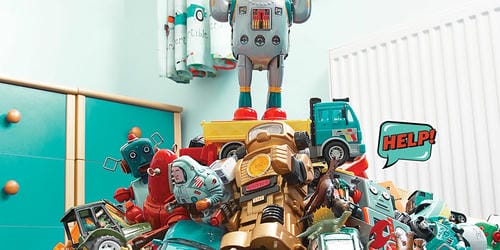
Toy rotation provides an alternative approach that focuses on reducing the number of accessible toys rather than endlessly reorganizing them.
Why More Storage Usually Fails
Organizational bins primarily address visibility rather than underlying overwhelm. Even when toys are neatly sorted into labeled containers, the total number of options available to a child remains unchanged, and this can still create cognitive fatigue.
When a child is confronted with a large number of toys, even if they are neatly stored, the experience can resemble being handed an overly long menu. Decision-making becomes more difficult, and play often becomes fragmented rather than focused.
Research and parenting experts frequently note that excessive toy availability can reduce sustained attention, leading to rapid switching between activities and shallow engagement with each toy. This is often observed in real households where children repeatedly dump bins, shift from one toy to another, and struggle to settle into meaningful play.
Parents also report that cleanup becomes more difficult in these environments because children often interact with many different toy categories at once, resulting in mixed and scattered messes that are harder to reset at the end of the day.
What Parents Think They Need vs. What Actually Helps
Many parents initially believe that they need more storage space, better labeling systems, larger bins, or additional furniture to handle toy overflow. In practice, however, these solutions often only postpone the underlying issue rather than resolve it.
For example, when parents focus on expanding storage, toys tend to continue accumulating and overflowing regardless of how many containers are introduced. Similarly, improving labeling systems may make organization visually appealing, but it does not reduce the number of toys a child is attempting to engage with at any given time.
In many cases, parents also assume that children need more stimulating toys to prevent boredom, yet increased toy variety can actually reduce sustained engagement. Children may appear to lose interest quickly not because toys are insufficient, but because they are overwhelmed by choice.
Finally, increasing bin size or storage capacity often leads to the continued accumulation of toys, which increases long-term cleanup demands rather than reducing them. In contrast, toy rotation reduces the number of toys actively available, which directly influences how children play and how easily the space can be maintained.
The Psychology Behind Toy Rotation
Toy rotation works primarily because novelty plays a significant role in sustaining a child’s interest. When toys are temporarily removed from sight and later reintroduced, they often feel new again, even if they have been owned for a long time.
This effect is reinforced by reduced visual clutter, which helps children focus more deeply on the toys they do see. With fewer competing stimuli in their environment, children are more likely to engage in sustained, imaginative play rather than constantly shifting attention between multiple items.
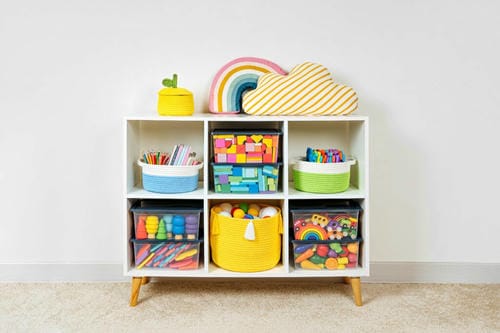
Child development specialists often describe this as a reduction in sensory overload. When a play space is simplified, children can concentrate longer on individual activities, leading to more immersive and creative play experiences.
A Realistic Example of Toy Overload
In a typical overfilled playroom, a child might have more than a hundred toys visible at once. These toys may be spread across multiple bins, shelves, and floor spaces, often mixed across different categories such as building sets, dolls, vehicles, and art supplies. Cleanup in such environments can take more than half an hour each evening because items are scattered across the entire space.
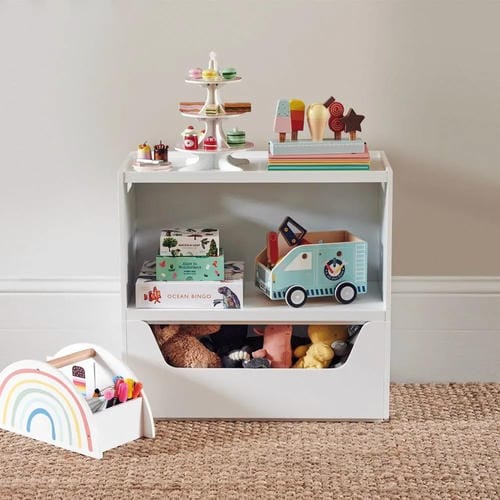
In contrast, a toy rotation system might limit visible toys to around 20 items at a time. These are usually organized on a simple shelf or in a few open containers, with the remaining toys stored out of sight in separate bins. Cleanup in this environment may take less than 10 minutes because the number of items in active use is significantly lower.
The difference between these two setups is not related to parenting ability or discipline. Instead, it reflects environmental design and how much cognitive load the play space places on both children and caregivers.
Why Children Play Better With Fewer Toys
One of the most misunderstood truths in parenting is this:
More toys do not automatically create better play. In fact, excessive toy access can fragment attention.
A child building with blocks notices stuffed animals nearby. Then remembers puzzle pieces. Then sees toy cars. Then pulls out pretend food. Fifteen minutes later, the room is destroyed and nothing meaningful happened. When fewer options exist, children often:
● explore toys more deeply
● invent more creative uses
● persist longer through frustration
● engage in more pretend play
Several toy rotation guides emphasize that limiting available toys encourages mastery and concentration.
Parents sometimes worry: “Won’t my child get bored?”
Usually the opposite happens. Boredom often decreases because children can actually focus long enough to enter immersive play.
The Financial Advantage Parents Rarely Notice
Toy rotation can also reduce household spending on toys. When children do not see all of their toys at once, previously stored items often feel new again when rotated back into circulation. This reduces the perceived need for constant new purchases.
In practical terms, families who adopt toy rotation often report fewer impulse purchases and fewer duplicate items. Children also tend to show less insistence on buying new toys during shopping trips because their existing toys regain novelty through rotation.
Over time, this can significantly reduce monthly spending on entertainment-related purchases while maintaining or even improving the child’s engagement with their existing toy collection.
Toy Rotation Is Easier Than Parents Think
Many parents avoid toy rotation because they imagine a complicated system involving spreadsheets, labels, and perfectly curated Montessori shelves.
Real-life rotation works best when it stays simple. A practical system often looks like this:
Step 1: Remove Everything
Gather all toys into one area. This stage shocks most parents.
Broken toys, duplicates, forgotten birthday gifts, missing puzzle sets, and random fast-food toys suddenly become visible.
Step 2: Divide Into Categories
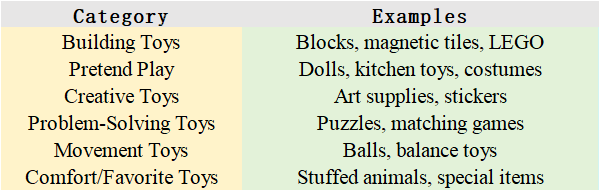
Step 3: Keep a Small Number Accessible
Most families function well with:
● 6–10 primary activities for toddlers
● 10–15 for preschoolers
● slightly more for older children
Step 4: Store the Rest Out of Sight
Closets, under-bed containers, garage shelves, or labeled tubs work well. The key is invisibility.
If children constantly see stored toys, rotation loses effectiveness.
Step 5: Rotate Based on Interest — Not a Strict Schedule
Some families rotate weekly. Others every month. Some simply rotate when children lose interest.
Flexibility works better than rigid perfection.
Signs Toy Rotation Is Working
Toy rotation is generally successful when parents observe longer periods of independent play, fewer boredom complaints, improved willingness to clean up, and a calmer overall environment. Children may also demonstrate more imaginative use of toys and less tendency to scatter multiple toys at once.
Even if the system is not perfectly maintained, gradual improvements in behavior and household calm are strong indicators that the approach is effective.
(This article is intended for informational purposes only and does not replace personalized parenting, developmental, or professional advice. Each child and household has unique needs, and systems should be adapted accordingly.)
FQAs
1. How often should toys be rotated?
Toy rotation frequency varies by household, but many families rotate every two to four weeks. The most effective timing is typically based on when children begin to lose interest in the current set of toys rather than a strict calendar schedule.
2. Should all toys be rotated, including books?
Books can also be included in rotation systems. Rotating books often helps maintain interest in reading by making older books feel new again when reintroduced.
3. What if my child keeps asking for stored toys?
It is common for children to request stored toys, especially at the beginning. Many families manage this by occasionally allowing specific requests while still maintaining a limited set of accessible toys.
About Author
Parker Ellery is a fictional parenting writer with a background in early childhood education and family systems design. She focuses on practical strategies that reduce household stress and improve daily routines for families with young children.
References
Babylist. (2026). Toy rotation can help your little one play more—How to do it.
Parents. (2023). Toy rotation system: How to set up a toy rotation system that reduces clutter and sensory overload.
Coral Care. (2026). Toy rotation for kids: An OT-informed guide to calmer play.
Guardian Storage. (2026). Organizing toys with the toy rotation method.
Stay on this blog for more practical parenting strategies that simplify home life without increasing complexity.