
May 26, 2026
Key Highlights:
● Distracted eating often happens without families realizing its impact on nutrition and connection.
● Screen time during meals can reduce awareness of hunger cues in both children and adults.
● Mealtime distractions are linked to increased overeating and lower-quality food choices.
● Mindful eating practices foster better communication, healthier habits, and more enjoyable shared meals.

Estimated Reading Time: 12 minutes┃Post By Sarah Lindholm
Distracted eating is quietly infiltrating family meals across the country. From toddlers scrolling on tablets to parents glancing at emails while serving dinner, mealtime has become a multitasking zone rather than a shared, mindful experience. The effects are subtle but measurable: reduced attention to satiety, lower-quality nutrition, and a weakening of the relational benefits that shared meals offer. Understanding and addressing distracted eating is crucial for both children’s development and family well-being.
What Distracted Eating Looks Like in Real Life
Imagine a typical evening in a suburban household:
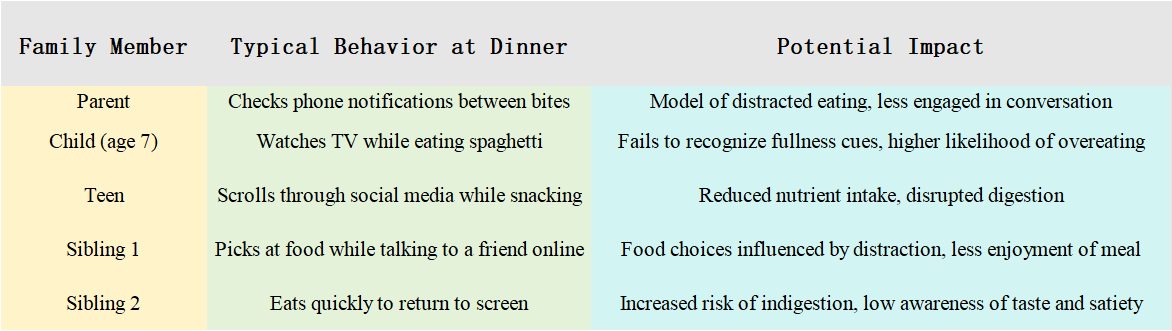
As this table illustrates, distracted eating affects each family member differently but cumulatively reduces the overall quality of the meal experience.
How Distracted Eating Impacts Health
Research shows that distracted eating can lead to overeating and poor food choices. For example:
● A 2019 study found that adults distracted by screens consumed up to 25% more calories than those eating mindfully.
● Children who eat while watching TV are more likely to prefer sugary and processed foods and may fail to develop internal hunger and fullness cues.
● Families who regularly multitask during meals report less communication and bonding, weakening the social benefits of shared meals.
Even seemingly small habits, like checking a phone mid-bite, can have a measurable impact over time.
Practical Strategies for Families
Addressing distracted eating requires realistic, implementable strategies rather than abstract advice. Here are actionable steps that can fit into everyday life:
Create a “Screen-Free Zone”
Designate the dining table as a no-screen area. This includes phones, tablets, and TVs.
Reward children with positive reinforcement for participating in meals without screens.

When this rule is consistently applied, families often notice immediate changes in conversation quality and eating pace. Children, in particular, tend to eat more slowly and engage more with their food when screens are removed.
Set Mealtime Rituals
Start with a simple family greeting or “one thing about your day” before eating.
Incorporate shared responsibilities like passing dishes or setting the table.
Introduce Mindful Eating Exercises
Encourage children to notice texture, taste, and color of foods.
Adults can model mindful eating by verbalizing observations about the meal.
Research in mindful eating suggests that reducing distractions during meals improves awareness of hunger and fullness cues and may support healthier long-term eating habits.
Adjust Portion Sizes and Food Presentation
Serving food family-style rather than pre-plated encourages slower eating and greater awareness of intake. Offering smaller initial portions and allowing seconds helps children learn to recognize when they are actually still hungry rather than eating continuously due to distraction. Over time, these adjustments help regulate intake more naturally.

Monitor Timing and Hunger Levels
Families who snack heavily close to mealtime often experience reduced appetite and increased reliance on distracted eating behaviors. By spacing snacks appropriately and ensuring children arrive at meals with mild hunger, parents can reduce the likelihood of rushed or distracted consumption. This supports better recognition of internal hunger cues rather than external stimulation from screens or entertainment.
Real-World Scenario
Consider the Parker family, a typical household of five. For years, mealtimes were chaotic: teens on phones, younger children distracted, and parents trying to manage work emails while preparing dinner. After implementing a one-month “screen-free dinner challenge,” the family noticed measurable improvements:
● Dinner Duration: Increased from 15–20 minutes to 25–30 minutes.
● Communication: Each member shared at least one daily highlight without prompts.
● Food Intake: Children consumed more vegetables and fewer processed snacks.
The Parker family example shows that small, intentional changes can transform mealtime from a distraction-filled routine to a meaningful family ritual.
Concrete Figures: Nutritional Benefits
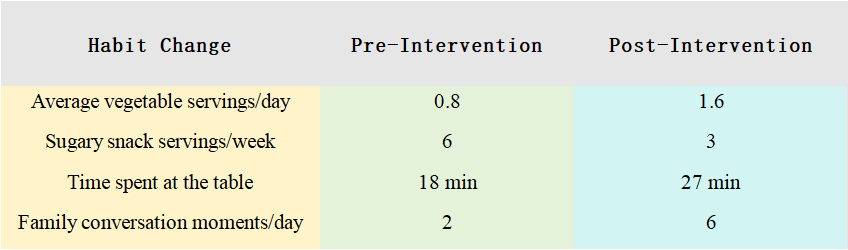
These figures demonstrate that reduced distraction can have tangible health and relational benefits for families.
Long-Term Impact
Over time, distracted eating can reshape how children and adults experience food, often in ways that are subtle at first but more persistent later. When attention is regularly pulled away from meals, people become less aware of hunger and fullness cues, making self-regulation more difficult. This can gradually lead to patterns of overeating or eating without true awareness of satiety.

Another long-term effect is the formation of less intentional eating habits. Families that frequently eat while distracted tend to prioritize convenience and speed, which can reinforce reliance on processed or low-nutrient foods. As these patterns become routine, they are more likely to carry into adolescence and adulthood, shaping lifelong dietary preferences.
There is also an impact on family connection. Meals that once served as a daily opportunity for conversation and emotional check-ins become fragmented when attention is divided. Over time, this reduces the natural flow of communication and weakens the sense of shared routine at the table.
Finally, children learn largely through observation. If they consistently see adults eating while distracted, they tend to adopt the same behavior as normal. This modeling effect makes distracted eating a habit that can persist across generations unless it is intentionally changed.
(The content of this article is for educational purposes and does not replace professional medical advice. Parents concerned about nutrition or behavioral issues should consult qualified healthcare providers.)
FQAs
1. What if my child refuses to eat without screens?
Start gradually by designating just part of the meal as screen-free. Praise small successes and model positive behavior.
2. Can distracted eating cause weight gain in children?
Yes, frequent distraction can lead to overeating and preference for calorie-dense foods, contributing to weight gain over time.
3. How long does it take to see changes in family mealtime quality?
Families often notice improvements in communication and eating habits within 2–4 weeks of consistent practice.
About Author
Sarah Lindholm is a family nutrition consultant and parenting coach with over 12 years of experience helping parents cultivate healthy mealtime routines. She specializes in practical, research-based strategies for reducing mealtime distractions and promoting mindful eating in children and adults alike.
References
American Heart Association. (2020). Mindful eating for families.
Fletcher, S., & Rollins, M. (2019). Effects of screen distraction on caloric intake. Journal of Nutrition Behavior, 12(3), 45–53.
Pieters, R., & Zeelenberg, M. (2021). Mindful eating interventions and child development. Journal of Child Health, 19(4), 210–218.
Stay tuned for more practical parenting strategies and research-backed tips to make family life healthier and more connected.