
June 2, 2026
In this Article:
● Evening sugar cravings can significantly delay children’s sleep onset.
● Sugar intake before bed can disrupt melatonin timing and sleep depth.
● Structured evening routines help reduce sugar-driven bedtime resistance.
● Practical dietary timing changes often improve sleep within days.

Estimated Reading Time: 12 minutes┃Post By Olivia Hartwell
Evening sugar cravings are often treated as a minor parenting inconvenience—an extra cookie, a small bowl of ice cream, a quick juice box before bed. But in real households, these small decisions often create a predictable chain reaction: delayed bedtime, increased bedtime resistance, and a child who suddenly “isn’t tired anymore” at 9:30 p.m.
This pattern is not accidental. Research shows that children who consume sugar later in the day tend to eat more in the evening and experience delayed sleep timing, particularly when sugar intake occurs after 8 p.m.
What looks like a behavioral issue at bedtime is often a physiological one that begins an hour or two earlier in the kitchen.
The Evening Sugar–Sleep Feedback Loop
When sugar enters a child’s system in the evening, it doesn’t just provide “energy.” It temporarily alters metabolic and hormonal signals that are closely tied to sleep readiness. Blood glucose rises quickly, insulin follows, and the body responds with fluctuating energy availability.
For children, this matters more than many parents expect because their circadian rhythms are still developing and more sensitive to environmental and dietary inputs.

A typical pattern observed in many families looks like this:
● Dinner is eaten at 6:30 p.m.
● A sweet snack is given at 7:30–8:30 p.m.
● Child becomes more active instead of settling
● Bedtime is pushed from 8:30 p.m. to 9:30–10:00 p.m.
● Sleep onset becomes slower and more fragmented
This is not simply “sugar excitement.” It is a physiological delay in the body’s transition toward sleep readiness.
Why Evening Sugar Is More Disruptive Than Morning Sugar
Evening sugar is more disruptive than morning sugar because it collides directly with the body’s natural sleep-transition phase. In the morning, the circadian system is oriented toward alertness, with higher cortisol levels and stronger insulin sensitivity, so glucose is processed efficiently and used as fuel for activity rather than interfering with rest later in the day.
At night, the physiology shifts. Melatonin begins rising, core body temperature drops, and the nervous system moves toward rest and recovery. Introducing sugar during this window creates a mismatch between metabolic activation and sleep preparation, which can delay sleep onset even if the child appears physically tired.

This effect is amplified by reduced insulin sensitivity in the evening. Blood sugar tends to stay elevated longer, and the resulting hormonal fluctuations can subtly increase alertness or emotional reactivity. Even small amounts of sugar can therefore extend the time it takes for a child to settle into sleep.
Even if a child falls asleep after evening sugar, sleep quality may still be affected. Studies suggest that late carbohydrate intake can alter sleep depth and continuity, leading to more fragmented rest and less restorative sleep overall.
In contrast, morning sugar occurs far from bedtime and within a metabolically active period, giving the body time to stabilize before sleep. The key difference is timing: morning sugar aligns with activity, while evening sugar interferes with the biological shift into sleep.
Hidden Sources of Evening Sugar Most Parents Overlook
Even when families avoid obvious desserts, sugar still enters evening routines through common foods:
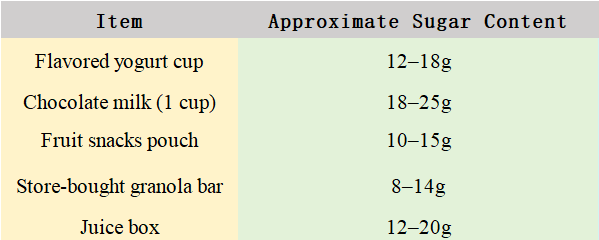
The issue is not only desserts—it is cumulative intake across multiple “small” items.
One pediatric nutritionist observed that children consuming even 20–30g of sugar after dinner were significantly more likely to resist bedtime routines and experience fragmented sleep patterns compared to children who avoided added sugars in the evening.
How Sugar Cravings Become a Bedtime Habit
Evening sugar cravings are rarely random. They often form through repetition and association:
1. Reward conditioning
If dessert consistently follows dinner, the brain expects it. Removing it can trigger frustration or negotiation.
2. Emotional decompression
After a structured school day, children may associate sugar with comfort and release.
3. Energy mismanagement earlier in the day
Low protein intake or irregular snacks can increase evening cravings.
Over time, the craving becomes less about hunger and more about routine expectation.
One parent described it bluntly: “It wasn’t hunger. It was the schedule in his head.”

Practical Adjustments That Work in Real Homes
Parents do not need strict dietary overhauls. Small structural changes tend to be more effective:
1. Move sugar earlier, not “never”
If dessert is important culturally or emotionally, shifting it to lunch or immediately after school often avoids bedtime disruption.
2. Replace the “post-dinner cue”
Children often expect something after dinner. Replacing it with a predictable non-food ritual (reading, bath, board game) reduces psychological resistance.
3. Stabilize afternoon nutrition
Protein-rich snacks after school reduce evening sugar seeking behavior.
4. Establish a clear kitchen closure time
Many families find success with a simple rule: no food after a fixed time (e.g., 7:30 p.m.).
5. Observe patterns instead of assumptions
Tracking sleep onset alongside evening food intake often reveals clear correlations within days.
Evening sugar cravings are not simply a discipline problem or a parenting failure point. They are often a predictable interaction between biology, habit, and timing.
Once parents begin to see bedtime behavior as partly metabolic rather than purely behavioral, the dynamic at night changes. The goal is not restriction—it is alignment between the child’s internal rhythms and the environment created around them.
When that alignment improves, bedtime tends to become less of a negotiation and more of a transition.
(This article is for informational purposes only and does not replace medical, nutritional, or pediatric guidance. Parents should consult qualified professionals for individualized concerns.)
FAQs
1. Does a small dessert always disrupt sleep?
Not always. Sensitivity varies by child, but timing close to bedtime increases the likelihood of delayed sleep onset.
2. Is fruit before bed also a problem?
Whole fruit is generally less disruptive due to fiber content, but large portions close to bedtime may still affect sensitive sleepers.
3. How quickly can parents expect improvement after reducing evening sugar?
Many families notice changes within a few days, though consistent routines typically show stronger results after one to two weeks.
About Author
Olivia Hartwell is a child nutrition and behavioral sleep consultant specializing in practical family routines. She focuses on how food timing, daily structure, and sleep hygiene interact in school-aged children, translating nutritional science into realistic household strategies.
References
National Sleep Foundation. (2019). Children’s sleep and nutrition guidelines.
Harvard Health Publishing. (2020). The impact of sugar on sleep and mood.
Shahdadian, F., Boozari, B., & Saneei, P. (2023). Association between short sleep duration and intake of sugar and sugar-sweetened beverages: A systematic review and meta-analysis. Sleep Health, 9(2), 159–176.