June 2, 2026
Key Takeaways:
● Many children share more personal thoughts during car rides than during face-to-face conversations.
● Side-by-side seating reduces social pressure and makes communication feel less intimidating.
● Car rides naturally remove many household distractions that compete for attention.
● Parents can use everyday drives to strengthen trust and emotional connection with their children.
Estimated Reading Time: 10 minutes┃Post By Claire Bennett
A father picks up his twelve-year-old daughter after soccer practice. The drive home takes only fifteen minutes. During dinner earlier that week, she answered every question with one-word responses.
"How was school?" "Fine." "Anything interesting happen?" "No."
Yet somewhere between a red light and a grocery store parking lot, she suddenly begins talking.
She mentions a disagreement with a friend. Then a concern about an upcoming test. A few minutes later, she asks a surprisingly thoughtful question about growing up.
The father says very little. He mostly listens. By the time they arrive home, they have had the longest conversation of the week.
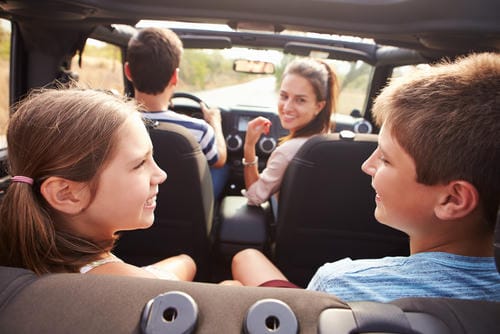
This situation plays out in countless families. Parents often notice that their children reveal worries, dreams, frustrations, and observations more freely in the car than they do at the dinner table or during direct conversations at home.
While it may seem mysterious at first, psychologists and child development specialists have identified several reasons why car rides create unique opportunities for communication. The combination of reduced eye contact, shared focus, predictable timing, and limited distractions can create an environment where children feel more comfortable expressing themselves.
Understanding why this happens can help parents make better use of these everyday moments.
The Power of Side-by-Side Communication
Most important conversations between adults happen face-to-face. Job interviews, meetings, and serious discussions typically involve direct eye contact.
Children often experience that differently.
For many kids, especially those who are shy, sensitive, anxious, or emotionally overwhelmed, direct eye contact can increase pressure.
Inside a car, the communication setup changes completely.
The parent looks at the road.
The child looks out the window.
Neither person feels obligated to maintain eye contact.
This simple arrangement removes a surprising amount of social tension. Experts have noted that conversations are often easier when people sit beside one another rather than directly across from each other because the interaction feels less confrontational.
Consider the difference:
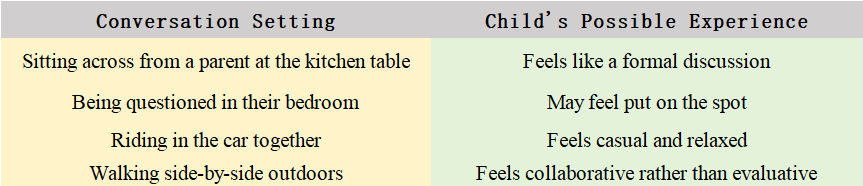
Many children are still developing confidence in expressing complicated emotions. Removing the pressure of direct observation can make sharing feel safer.
Reduced Distractions Change the Communication Quality
Modern home environments are filled with competing stimuli:
Television noise
Phones and notifications
Siblings interrupting
Household tasks
Background movement and multitasking
In contrast, a car ride is relatively controlled. While not perfectly quiet, it removes many of the interruptions that fragment attention at home.
This matters because children often require uninterrupted cognitive space to organize thoughts and translate emotions into words.
A simplified comparison:
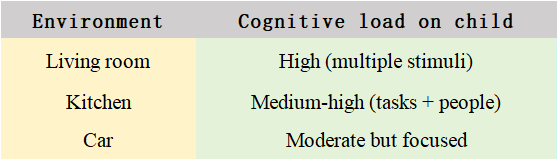
With fewer external interruptions, conversation becomes easier to sustain and less likely to break mid-thought.
It also gives parents more consistent opportunities to listen without interruption, which increases the likelihood that children will continue speaking rather than shutting down.
Why Children Feel Less “Observed” in Cars
One of the most overlooked factors is perception of observation.
At home, especially during direct conversation, children may feel like they are being closely watched—emotionally and physically.
In the car, the dynamic shifts.
The parent is primarily focused on driving. The child is not the center of visual attention. This reduces self-consciousness.
Psychologists often link this to lower conversational inhibition: when individuals feel less scrutinized, they are more likely to disclose personal thoughts.
This is especially relevant for children and teenagers, who are still developing emotional expression and may be sensitive to perceived judgment.
A typical emotional difference:
● Face-to-face: “I’m being analyzed.”
● In the car: “We’re just talking while going somewhere.”
That subtle shift can determine whether a child shares anything meaningful at all.
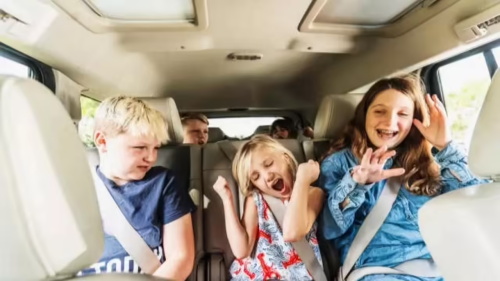
Teenagers Often Open Up More in Cars Than Younger Kids
Parents frequently notice a stronger effect during adolescence.
Teenagers tend to resist direct questioning more strongly than younger children because they are developing autonomy and identity boundaries.
However, they still need connection.
The car creates a compromise space:
● Not fully independent (they rely on the ride)
● Not fully controlled (no formal interrogation tone)
● Socially parallel (not face-to-face confrontation)
This balance often makes teens more willing to talk.
Many parents describe learning more about friendships, school stress, or emotional struggles during short drives than during longer conversations at home.
The reason is not that teens suddenly become more talkative—it is that the environment reduces resistance enough for communication to begin.
Common Mistakes Parents Make During Car Conversations
Talking too much instead of listening
A common mistake is that parents dominate the conversation. In trying to make the most of the drive, they may explain or advise continuously without giving the child enough space to respond.
When this happens, children often disengage or give short answers. Since they cannot easily exit the interaction in a car, they may simply mentally withdraw.
Short pauses and silence are often more effective than constant talking because they give children time to think and respond naturally.
Asking too many questions in a row
Another issue is rapid-fire questioning: “How was school? What did you do? Who did you talk to?”
Even with good intentions, too many questions can feel like an interrogation. Children may respond briefly or shut down.
A better approach is to ask one open-ended question, then wait. Let the conversation develop instead of forcing it forward.
Jumping straight into advice
Parents often move quickly into problem-solving when a child shares something difficult.
However, immediate advice can stop the conversation from developing. Children may still be processing their own thoughts and mainly need to feel heard.
Reflecting first—summarizing or acknowledging feelings—keeps the dialogue open longer and builds trust.
Making every ride a serious talk
If every car ride becomes emotionally heavy, children may start to avoid sharing altogether.
Light conversations about daily life, humor, or small observations are just as important. They create comfort and make deeper talks more likely when needed.
Balance matters more than intensity.
Not giving full attention
Distraction is a major barrier. Checking phones or splitting attention reduces the quality of interaction.
Children notice when attention is divided. Even small signs of distraction can make them less willing to talk in future rides.
Being present—even in silence—is more powerful than multitasking while talking.
Ignoring signs that the child is not ready
Not every moment is right for conversation. Short answers, silence, or topic changes often signal low readiness.
Pushing at those moments can create resistance. Allowing quiet time often works better, as children may reopen the conversation later.
Practical Ways to Encourage Natural Conversation
The goal is not to force communication but to create conditions where it emerges naturally.
Try this
“How was school?”
“What was the most interesting part of your day?”
“Did you behave?”
“What made you laugh today?”
“Anything happen?”
“What surprised you today?”
“How are your friends?”
“Who did you spend time with today?”
Open-ended prompts encourage narrative responses rather than yes/no answers.
Conclusion
Children often talk more during car rides because the environment reduces psychological pressure, removes distractions, creates predictable time limits, and encourages side-by-side communication patterns that feel less confrontational.
These conditions collectively make it easier for children to organize thoughts and express emotions that might otherwise remain unspoken in more structured home settings.
The key insight is not that cars are special—but that the structure of car interactions naturally supports better communication.
When used intentionally, even short daily drives can become meaningful opportunities for connection, trust-building, and emotional understanding between parent and child.
(This article is intended for informational and educational purposes only. Every child communicates differently, and no single strategy works for all families. Parents should adapt communication approaches to their child's personality, developmental stage, and individual needs. This article does not replace professional guidance from qualified child development or mental health professionals.)
FAQs
1. What if my child stays quiet during car rides?
Not every child will immediately become talkative. Consistent, low-pressure conversations over time often produce better results than trying to force discussion during every drive.
2. Are short car rides still useful for communication?
Yes. Even five to ten minutes of uninterrupted conversation can strengthen connection and create opportunities for meaningful discussion.
3. Should parents bring up serious issues during car rides?
Car rides can be a good setting for sensitive topics, but it is usually better to begin with open-ended discussion rather than launching directly into criticism or discipline.
About Author
Claire Bennett is a fictional parenting writer and family communication educator with over fifteen years of experience studying parent-child relationships, everyday family routines, and emotional development. Her work focuses on practical, research-informed strategies that help parents build stronger connections through ordinary daily interactions.
References
Brown, A. (2024). Why talking to your child matters, and 5 ways to do it. Psychology Today.
Patton-Smith, A. (2026). Why car rides are ideal for meaningful conversations with your child. WTOP News.
Times of India. (2025). Why children open up more during car rides and bedtime talks.
Vidal, B. (2025). If you become more talkative when someone's in the car with you, here's why: Psychology explains it. Metabolic.
Stay awhile and explore more parenting articles on this blog for practical, research-informed ideas that make everyday family life a little easier and more connected.