
June 5, 2026
Key Takeaways:
● Some children eat well at school but refuse meals at home due to differences in environment and routine.
● Peer influence and structured meal times can encourage better eating at school.
● Home mealtimes may include distractions or pressure that discourage children from eating.
● Differences in food presentation, taste, and portion sizes can affect a child’s willingness to eat.

Estimated Reading Time: 12 minutes┃Post By Emily Harper
Some children can finish every bite of lunch at school yet push away a plate of the same food at home. Parents often feel frustrated and wonder why a child who is clearly hungry earlier in the day suddenly refuses dinner. This phenomenon is more common than many think, and understanding it requires looking beyond nutrition and into the dynamics of environment, routine, and psychology.
The School Environment Advantage
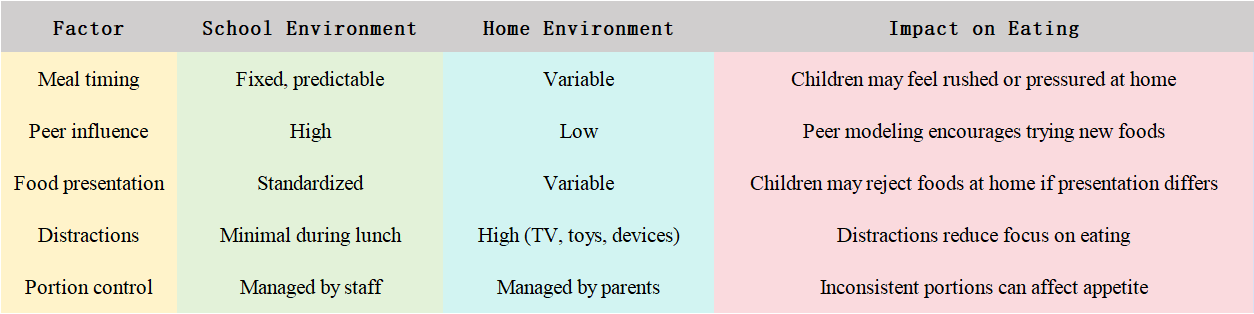
Schools provide structured meal times. Most elementary schools have a designated lunch period lasting 20–30 minutes, often accompanied by a predictable routine. Children know they have a limited time to eat, which encourages focus on food rather than distraction.
Peer influence also plays a role. A child is more likely to try foods they see their friends eating. In one observational study, children were 40% more likely to eat a new vegetable when peers were also consuming it. This illustrates the strong social component of eating in school settings.
Additionally, school meals are typically uniform in presentation and portion sizes. A standard tray with visually appealing portions—bright colors, easy-to-handle sizes, and minimal mixing of foods—can make eating simpler and more appealing for children.
Home Environment Challenges
At home, mealtime dynamics are often different. Parents may unintentionally create pressure by insisting a child eat certain foods or finish their plate. This can trigger resistance. Unlike school, home meals can vary in timing, type, and presentation. A child who ate pasta at school may refuse dinner at home if the sauce or portion looks different.
Distractions are another factor. Screens, toys, and even conversations can interfere with focus on eating. Some children associate mealtime at home with stress or conflict, which suppresses appetite. Emotional climate matters: a child who witnessed a tense exchange earlier in the evening may lose interest in food entirely.
Psychological and Sensory Influences
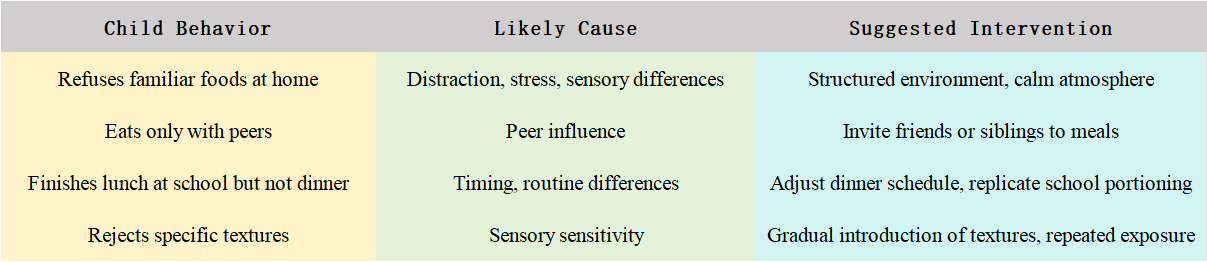
Children are highly sensitive to sensory differences. Taste, texture, and smell can determine whether they accept or reject a meal. Foods prepared at home may be seasoned differently or served at a different temperature than at school, which can trigger picky eating behaviors.
Research indicates that children with heightened sensory sensitivity may refuse foods at home simply due to subtle differences they perceive but adults might overlook. For instance, a child may accept a crunchy carrot stick at school but reject a softer home-cooked version.

Practical Strategies for Parents
Create a School-Like Dinner Routine
One of the most effective ways to address dinner refusal is to recreate some of the structure children experience during the school day. School lunches usually happen at the same time, in the same place, and under predictable conditions. At home, dinner can vary significantly from one day to the next. Establishing a consistent dinner schedule can help children recognize and respond to hunger cues more effectively. A child who knows dinner is always served at 6:00 p.m. is more likely to arrive at the table prepared to eat than a child whose evening meal fluctuates between 5:00 and 7:30 p.m. from day to day. Consistent routines are frequently associated with smoother family meals and fewer mealtime struggles.
Reduce Mealtime Distractions
Parents can also benefit from reducing mealtime distractions. Many children eat in relatively distraction-free school cafeterias, but at home they may have access to televisions, tablets, toys, or other activities competing for their attention. Creating a dedicated eating environment allows children to focus on their meal and engage with family members.

Even simple changes, such as turning off screens and keeping toys away from the table, can noticeably improve participation during dinner. Experts on childhood nutrition often recommend a calm eating environment because excessive distractions can interfere with children's awareness of hunger and fullness cues.
Offer Children Appropriate Choices
Another helpful approach is to give children a reasonable degree of control over their meals. School lunch programs often provide choices, whether through selecting a meal option, choosing between fruits, or deciding what to eat first on their tray. At home, parents can offer similar opportunities without turning dinner into a negotiation. For example, a child might choose between broccoli and green beans, decide which plate to use, or help arrange food on the table. These small decisions can increase a child's sense of ownership and reduce resistance. Allowing age-appropriate choices helps children feel involved while keeping parents responsible for the overall menu.
Serve Smaller Portions First
Portion size is another frequently overlooked factor. Parents often serve portions based on what they believe a child should eat rather than what the child is realistically prepared to consume. Large servings can appear overwhelming, particularly after a day that included snacks, school lunch, and after-school activities. Serving smaller portions initially can make dinner seem more manageable and less intimidating. If the child remains hungry, additional servings can always be offered later. This strategy also reduces food waste and lowers pressure at the table. Many feeding specialists recommend starting with small portions and allowing children to request more if they are still hungry.
Keep the Atmosphere Calm and Pressure-Free
The emotional atmosphere surrounding meals matters just as much as the food itself. Research has found that picky eating can create significant stress for parents and affect the entire family meal experience. When dinner becomes a daily battle, children may begin associating mealtime with tension rather than nourishment.

Statements such as "Just take three more bites" or "You can't leave until you finish your vegetables" can unintentionally increase resistance. Children often respond more positively when parents provide the meal, model healthy eating habits, and allow the child to decide how much to eat. A calm and neutral approach helps preserve a healthy relationship with food over time.
Involve Children in Meal Preparation
Involving children in meal preparation can also make a surprising difference. A child who helps wash vegetables, stir ingredients, set the table, or choose a recipe often feels more invested in the final meal. Parents frequently report that children are more willing to sample foods they helped prepare themselves. Even young children can participate in age-appropriate kitchen tasks, transforming dinner from something that is simply presented to them into something they helped create. The goal is not to make children responsible for cooking, but to help them become familiar with ingredients and develop a sense of curiosity about food.
Look at Eating Patterns Over Time
Finally, parents should remember that appetite naturally fluctuates. Some children consume a large lunch at school and simply need less food in the evening. Others may fill up on snacks during the afternoon and arrive at dinner without much hunger. Rather than viewing every refused meal as a problem, it can be useful to look at eating patterns across an entire day or week. Consistently offering balanced meals, maintaining predictable routines, and keeping mealtimes positive are often more effective than focusing on whether a child finishes a particular dinner on a particular night. Many parents find that stepping back from nightly food battles helps both children and adults enjoy family meals more.
(This article is intended for informational and educational purposes only and is not a substitute for professional medical advice, diagnosis, or treatment. Every child is unique, and eating behaviors can be influenced by a wide range of developmental, psychological, and health-related factors that may require individualized guidance. Parents concerned about persistent food refusal, significant changes in appetite, or possible feeding disorders should consult a qualified pediatrician, registered dietitian, or child development specialist to ensure appropriate evaluation and support.)
FAQs
Q1: Is picky eating at home a sign of an eating disorder?
A: Usually not. Most children who eat well at school but not at home display situational or environmental picky eating, not a clinical eating disorder.
Q2: How long does it take to see improvements in home eating?
A: Changes often take 2–4 weeks, depending on the child’s temperament and the consistency of new routines.
Q3: Should parents force children to eat at home if they refused school lunch?
A: No. Pressuring can increase resistance. Encouraging a calm, structured approach works better long-term.
About Author
Emily Harper is a child development specialist with over 12 years of experience focusing on early childhood behavior, family dynamics, and practical nutrition strategies for children. Throughout her career, she has worked with parents, educators, and pediatric support teams to better understand how environment, routine, and emotional context shape a child’s eating habits. Her approach combines behavioral psychology with real-world parenting challenges, translating research-based insights into strategies that families can realistically apply in daily life. Emily’s work emphasizes practical solutions rather than rigid rules, helping parents reduce mealtime stress while encouraging healthier, more positive relationships with food.
References
Birch, L. L., & Fisher, J. O. (1998). Development of eating behaviors among children and adolescents. Pediatrics, 101(3), 539–549.
Patrick, H., & Nicklas, T. A. (2005). A review of family and social determinants of children’s eating patterns and diet quality. Journal of the American College of Nutrition, 24(2), 83–92.
Ventura, A. K., & Birch, L. L. (2008). Does parenting affect children’s eating and weight status? International Journal of Behavioral Nutrition and Physical Activity, 5, 15.
Explore more insights on family nutrition and practical parenting tips right here on our blog.