
May 28, 2026
Key Takeaways:
● Many school-morning meltdowns are caused by stress overload, not “bad behavior.”
● Children often struggle most during rushed transitions and unpredictable routines.
● A calm 15-minute reset can lower emotional intensity before leaving the house.
● Small environmental changes, such as reducing instructions and preparing the night before, can dramatically improve mornings.

Estimated Reading Time: 11 minutes┃Post By Morgan Wren
At 7:18 a.m., everything in the house can look technically “on track.” The child is dressed, the backpack is near the door, and breakfast has been partially eaten. But then a small trigger appears—lost shoes, the wrong socks, a reminder to hurry—and the entire morning collapses into tears, resistance, or refusal to move.
One parent described it as “a switch flipping instantly,” but what actually happens is slower and more cumulative. The child has likely been absorbing stress for the past 20–40 minutes: instructions, time pressure, sensory discomfort, and anticipation of school transitions.
Morning routines compress multiple high-demand tasks into a short window: dressing, eating, organizing belongings, managing separation, and preparing for a structured environment. Research consistently shows that predictable routines support emotional regulation in children, while disruptions or rushed transitions can increase irritability and behavioral outbursts .

School mornings are often described by clinicians as a “perfect storm” of time pressure and competing demands, where both parents and children are trying to meet deadlines while regulating emotions simultaneously .
The key misunderstanding is this: most morning meltdowns are not sudden. They are the endpoint of escalating overload.
According to resources from the American Academy of Pediatrics and HealthyChildren.org, consistent routines and emotionally supportive transitions help children regulate stress and improve cooperation during busy parts of the day.
The important detail many parents miss is this: Children often melt down after holding themselves together for too long. And school mornings contain dozens of small pressure points that accumulate quickly.
What a Morning Meltdown Actually Looks Like
An emotional meltdown does not always manifest as screaming or crying. In many families, it may present as defiance, distractibility, erratic behavior, or an extremely sluggish response. For instance, a child might suddenly refuse to wear shoes they usually find acceptable, or become hyper-focused on subtle sensory details—such as clothing tags, seams, or the texture of food. It is precisely this variability that often causes parents to overlook the early warning signs.
The following is an analysis of common behaviors and the underlying meanings they typically reflect:
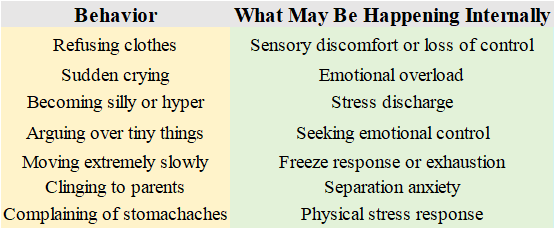
Overstressed children may also experience physical ailments, such as stomachaches or headaches; these symptoms typically surface only on school days and subside once the source of stress is removed.
In reality, many parents find themselves thinking, "My child was perfectly fine just five minutes ago," only to see them now "completely fall apart." Yet, the nervous system had, in fact, been undergoing gradual changes long before the visible meltdown actually occurred.
Why Mornings Trigger Emotional Overload So Easily
1. Too Many Instructions in Too Little Time
Imagine hearing this within 10 minutes:
“Brush your teeth.”“Finish breakfast.”“Find your folder.”“Hurry up.”“Did you pack your water bottle?”“Put your socks on.”“We’re late.”
For adults, this is manageable. For children, especially younger ones, it can exceed working memory and executive function capacity.
Children are still developing skills like task sequencing, prioritization, and cognitive switching. When instructions arrive too quickly, the brain can shift from cooperation into shutdown or resistance simply due to overload.
This is why escalation often appears “out of nowhere”—the internal load has already reached capacity before the final instruction is given.

2. School Requires Emotional Energy Before the Day Even Starts
School is not a single event; it is a bundle of emotional demands:
Separation from caregivers
Social interaction and peer navigation
Noise and sensory input
Academic expectations
Rule-following and structure
Performance pressure
Even children who like school can experience anticipatory stress. Developmental research notes that transitions and separation are common triggers for anxiety-related behaviors in the morning routine .
In other words, the meltdown is often less about resistance to school itself and more about the emotional cost of getting there.
3. Sleep Debt and Physical Stress Amplify Reactions
Even small sleep deficits can significantly reduce emotional flexibility. Overtired children often do not appear sleepy; instead, they become reactive, impulsive, or emotionally volatile.
Parents frequently misinterpret this as “attitude,” when it is often reduced self-regulation capacity. When the brain is fatigued, even minor frustrations—like a tight sock or missing pencil case—can trigger disproportionate reactions.
This is especially visible on rushed mornings when children are expected to transition quickly from rest to full cognitive and social performance.
The 15-Minute Morning Reset
Most parents respond to morning chaos by increasing urgency: more reminders, faster instructions, stronger consequences. However, escalation tends to intensify nervous-system activation rather than reduce it.
A more effective approach is a short structured reset that temporarily removes pressure from the system.
The 15-minute reset is not about delaying school preparation—it is about preventing emotional collapse that ultimately causes longer delays.
Here is a realistic version used by many families:
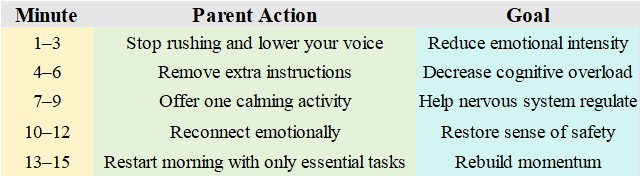
The key shift is that the parent temporarily stops trying to “solve” the behavior and instead focuses on stabilizing the emotional system first.
Children in meltdown states are typically not capable of processing logic or correction until their arousal level decreases.
1. The Most Effective Reset Activities
Not every calming activity works for every child. However, these tend to reduce stress effectively because they lower stimulation rather than adding more demands.
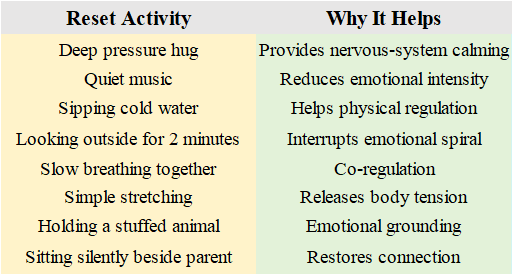
Children regulate best through emotional safety and calm co-regulation, not verbal overload.
2. The Night-Before Changes That Reduce Morning Meltdowns
The most successful morning routines usually begin the evening before.
Reducing morning decision-making significantly lowers emotional overload.
Here are the highest-impact changes:
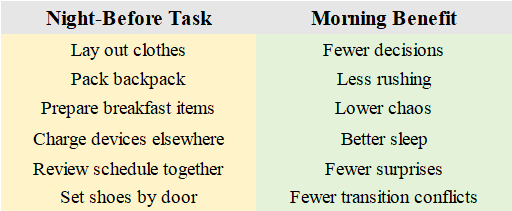
Experts consistently recommend preparing ahead because it reduces stress accumulation during busy transitions.
What If the Meltdowns Continue?
Occasional morning meltdowns are extremely common. However, persistent severe distress may deserve deeper attention. Consider speaking with a pediatrician or child mental health professional if your child:
● Experiences daily panic before school
● Has frequent physical complaints
● Struggles severely with separation
● Shows major sleep disruption
● Has escalating aggression
● Cannot recover emotionally after transitions
Sometimes school refusal, anxiety disorders, ADHD, sensory processing challenges, or bullying contribute to chronic morning distress. Early support matters. The American Academy of Pediatrics notes that emotional and behavioral challenges in early childhood can affect long-term well-being when stress remains unaddressed.
Why “Hurry Up” Usually Makes Things Worse
Many parents unknowingly increase morning stress through repeated urgency cues.
Examples include:
● “We’re late.”
● “Move faster.”
● “Why is this taking so long?”
● “You do this every morning.”
These statements are understandable. But for overwhelmed children, urgency often activates panic rather than cooperation.
Interestingly, parents in online parenting discussions frequently report that mornings improve when routines become calmer and more predictable rather than stricter.
One parent described their successful strategy as maintaining “cheerful momentum” instead of constant correction. That phrase captures something important:
Children regulate emotions partly through the emotional tone around them.
(This article is intended for educational and informational purposes only and should not replace professional medical, psychological, or developmental advice. Parents concerned about persistent emotional, behavioral, or school-related difficulties should consult a qualified pediatrician or licensed mental health professional.)
FAQs
1. Is it normal for children to cry before school even if they like school?
Yes. Many children enjoy school overall but still struggle with transitions, separation, fatigue, or morning stress overload. Emotional difficulty before school does not automatically mean they dislike their classroom experience.
2. Should parents use consequences for school-morning meltdowns?
Consequences may help with intentional misbehavior, but emotional meltdowns are often signs of nervous-system overload rather than deliberate defiance. Regulation strategies usually work better during the emotional peak.
3. How long does it take for a new morning routine to improve behavior?
Many families notice small improvements within one to two weeks, but consistent routines often require several weeks before children fully adapt emotionally.
About Author
Morgan Wren is a fictional parenting writer and former family support educator who focuses on emotional regulation, school transitions, and practical home routines for young children. Her work centers on helping parents reduce daily stress through realistic, evidence-informed strategies that fit modern family life.
References
American Academy of Pediatrics. (2022). Early brain development.
Childcare.gov. (2025). Supporting children’s well-being.
HealthyChildren.org. (2024). The importance of family routines.
Parents. (2025). 8 tips for getting out the door and on-time for school.
Stay awhile and explore more parenting articles on this blog for practical, realistic strategies that make everyday family life calmer and more manageable.